Personal Alarms vs. Home Alarms — Knowing Which One You Need
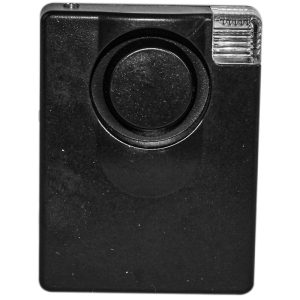
Personal alarms are designed to go with you. You clip them to a bag, attach them to a keychain, or slip them in a pocket — then activate them if you're followed, threatened, or need to draw attention fast. Home alarms guard specific locations: a door you want to know about the moment it opens, a window that shouldn't be touched, or a room where the sound alone is the deterrent. Many buyers end up with one of each, and at these prices, that's a reasonable call.
What the Decibel Rating on Personal Alarms Actually Means
Every alarm in this category lists a dB rating, and the difference between 90dB and 130dB is not subtle. At 90dB, it's roughly as loud as a motorcycle. At 120dB, it's comparable to a jet engine at close range — painful to be near. At 130dB, it's physically disorienting. The higher ratings are better for open outdoor spaces where sound disperses quickly; the lower ratings still do serious work indoors where sound bounces off walls. Wearable personal alarms at 120–130dB are the standard for personal safety use.
Personal Alarms Built for Travelers, Renters, and Anyone Without a Security System
You don't need to own your home to secure it. Door stop alarms and magnetic door and window alarms work in hotel rooms, dorm rooms, apartments, and anywhere you're staying temporarily. They require no drilling, no adhesive damage, and no landlord approval. Pack one in a travel bag and you've added a meaningful layer of protection anywhere you sleep.
Frequently Asked Questions About Personal & Home Alarms
Q: How loud are these personal alarms in real terms?
The loudest models in this lineup hit 130dB — that's roughly the level of a gunshot or jackhammer at close range, and it's physically painful to be near. At that volume, a personal alarm draws attention from a significant distance outdoors and causes immediate disorientation for anyone standing nearby. Even the 90–100dB units are loud enough to startle and alert in most indoor situations.
Q: Do these home alarms require professional installation?
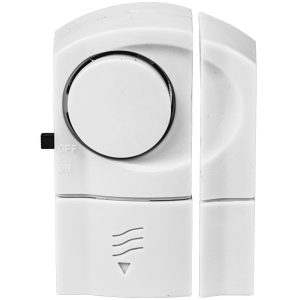
None of them do. The door stop alarm wedges under any inward-opening door with no mounting required. The magnetic door and window alarms use a simple magnetic contact — one piece on the frame, one on the door or window. The glass break alarms attach with included hardware. Setup for any model takes under five minutes.
Q: Can I use a personal alarm if I'm elderly or have limited hand strength?
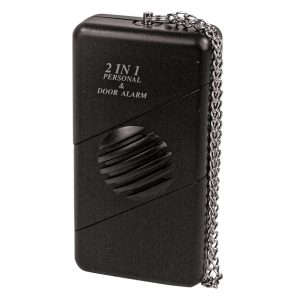
Yes — that's exactly what several of these are designed for. The pull-pin models like the keychain alarm activate by simply pulling a small cord, requiring almost no grip strength. The 2-in-1 Personal & Burglar Door Alarm offers both carry and door modes in one low-cost unit. Personal alarms are one of the most recommended safety tools for elderly individuals precisely because there's nothing to aim, load, or operate under pressure.
Q: Are personal alarms legal everywhere?
Personal alarms are legal in all 50 states with no restrictions — they're noise-making devices with no harmful components. Unlike pepper spray or stun guns, there are no age requirements, carry restrictions, or permit considerations. They're also permitted in schools, airports (in carry-on bags), and places where other self-defense tools aren't allowed.
Q: What's the battery life on these alarms?
Most personal alarms in this lineup run on standard replaceable batteries — typically AAA or button cells — with a standby life measured in months or years. The alarm only draws power when activated, so a fresh battery can run the siren for 30–60 minutes of continuous use, which is far more than any real-world situation requires. Check each product page for battery type and replacement notes.
Related Categories and Guides